


Customer Retention Strategy
Design retention systems that reduce silent churn, increase lifetime value, and stabilize enterprise growth.
Retention Is Breaking Before It Shows
The Forrester 2024 U.S. Customer Experience Index™ confirms that customer-obsessed organizations materially outperform peers in loyalty and growth. Bain & Company’s loyalty research demonstrates that increasing customer retention by just 5% can raise profits between 25% and 95%.

Profit Is Directly Linked to Retention
A 5% improvement in retention can increase profits by 25%-95%, depending on industry economics.

Experience Leaders Outperform
Organizations leading in customer experience consistently achieve stronger loyalty and revenue stability.

Retention Variance Signals Structural Gaps
Wide retention differences across industries indicate that churn is often driven by internal maturity- not market conditions alone.
Where Retention Advantage Is Created
Most organizations detect churn after revenue impact appears. Few measure disengagement early. Even fewer structure the enterprise to prevent it. Silent churn begins long before cancellation- through reduced engagement, slower interaction cycles, declining perceived value, and inconsistent customer treatment. Retention advantage emerges when behavioral signals are measured early, aligned across functions, operationalized in workflows, and governed consistently.

Customer Retention Through Enterprise MATURITY
Retention advantage follows a structured maturity progression.
M
Measure
Measure behavioral drift before churn becomes visible. Detect probability and propensity shifts that indicate early disengagement.
A
Align
Align retention objectives across marketing, product, sales, service, and operations. Retention deteriorates when incentives and accountability remain siloed.
T
Transpose
Transpose churn signals into operational design. Convert insight into predictive intervention models and workflow adjustments.
U
Upskill
Upskill leadership and frontline teams to act before escalation. Predictive retention requires interpretive capability- not just reporting dashboards.
R
Refine
Refine retention triggers continuously. Monitor exception patterns and inconsistent customer experiences that erode trust over time.
I
Integrate
Integrate retention intelligence into CRM, product systems, service operations, and strategic decision-making processes.
T
Track
Track leading indicators of disengagement- probability score movement, engagement velocity decline, value perception shifts, and cross-functional consistency.
Y
Yield
Yield sustainable retention growth. Increase customer lifetime value, reduce acquisition dependency, and stabilize revenue predictability at scale.
3x
Revenue Growth
30%
Reduced Cost
2x
Customer Retention
40%
Faster Decisions
What Enterprise Leaders Gain
- Clarity on silent churn drivers
- Predictive visibility into retention risk
- Cross-functional retention accountability
- Revenue stability at scale
- Strategic growth resilience

Related Insights
Practical guidance for executives navigating digital maturity.

CJM Journey Stages and Touchpoints: Recognizing Distinctions

The Key to Smarter, Sustainable, and Scalable Business with Customer-Centric Digital Models – A Podcast Summary

Opening Up New Horizons: The Advantages of Customer Journey Mapping
Explore the Conversation
Reveal Where Retention Is Quietly Eroding
Most organizations measure churn. Few measure disengagement.
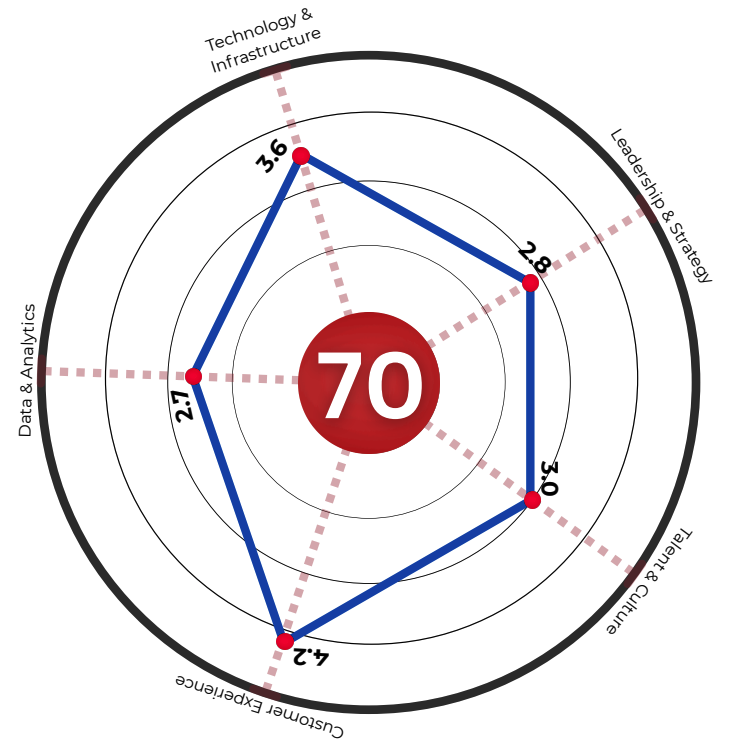
The Digital Maturity Assessment evaluates how retention signals flow across leadership, systems, strategy, and execution- and where structural gaps allow customers to quietly exit.
You don’t need another campaign. You need structural retention clarity.
Nav helps organizations design retention systems grounded in customer truth- not internal assumptions.
FAQ
Your Questions Answered: Insights for Clarity and Confidence
Customer retention is an organizational outcome, not a departmental function. It is shaped by product, service, operations, and decision-making- not one team alone.
Yes- when organizations move beyond lagging metrics.
Digital maturity enables the use of leading indicators that surface risk earlier.
No.
While retention drivers vary by industry, the underlying principles apply across sectors.
Loyalty programs focus on incentives.
Retention strategy focuses on value delivery, friction removal, and experience consistency across the customer lifecycle.
Digital maturity determines how well an organization can understand customers, act consistently across touchpoints, and translate insight into coordinated action.
The assessment clarifies maturity stage, key gaps affecting retention, and strategic focus areas.
It is designed to inform decisions- not push predefined solutions.
Elevate Your Retention Strategy
Take the assessment and benchmark your progress today.