


Digital Maturity
Understand how organizations evolve from fragmented digital activity to coordinated enterprise transformation.
Why Digital Maturity Matters
Organizations today operate in an environment where digital technologies are widely adopted. Platforms, data systems, and automation exist across most enterprises. Yet performance often remains inconsistent. The difference is rarely the amount of technology deployed. It is the maturity of the system connecting strategy, data, processes, and decision-making. Digital maturity explains how organizations move from fragmented digital activity to coordinated enterprise capability.
Evolution of Transformations
| Timeline | Technology | Initial Fear | What Changed |
| 1800-1900 | Electricity | Invisible danger, fires | Became essential to daily life |
| 1950-1960 | Television | Mind control, moral decay | Became cultural cornerstone |
| 1950-1970 | Aviation | Safety, loss of control | Enabled global mobility |
| 1950-1980 | Computerization | Job loss, dehumanization | Productivity backbone |
| 1990-2000 | Internet | Loss of privacy, chaos | Daily communication fabric |
| 2005-2015 | EVs | Range, infrastructure, trust | Becoming mainstream |
| 2022-???? | Al | Loss of control, job loss, intelligence | Still in early normalization |
Every major technological shift follows a similar pattern. New capabilities initially create uncertainty, then gradually become foundational infrastructure. Today we are entering the next transformation wave – Artificial Intelligence.
What Is Digital Maturity?
Digital maturity reflects how effectively an organization integrates technology, data, people, and processes to support enterprise decisions and operational performance. It is not measured by the number of tools deployed.
It is measured by how reliably digital systems enable:
- Strategic execution
- Operational coordination
- Customer experience
- Enterprise decision-making
As maturity increases, digital capability shifts from isolated initiatives to a coordinated enterprise system.
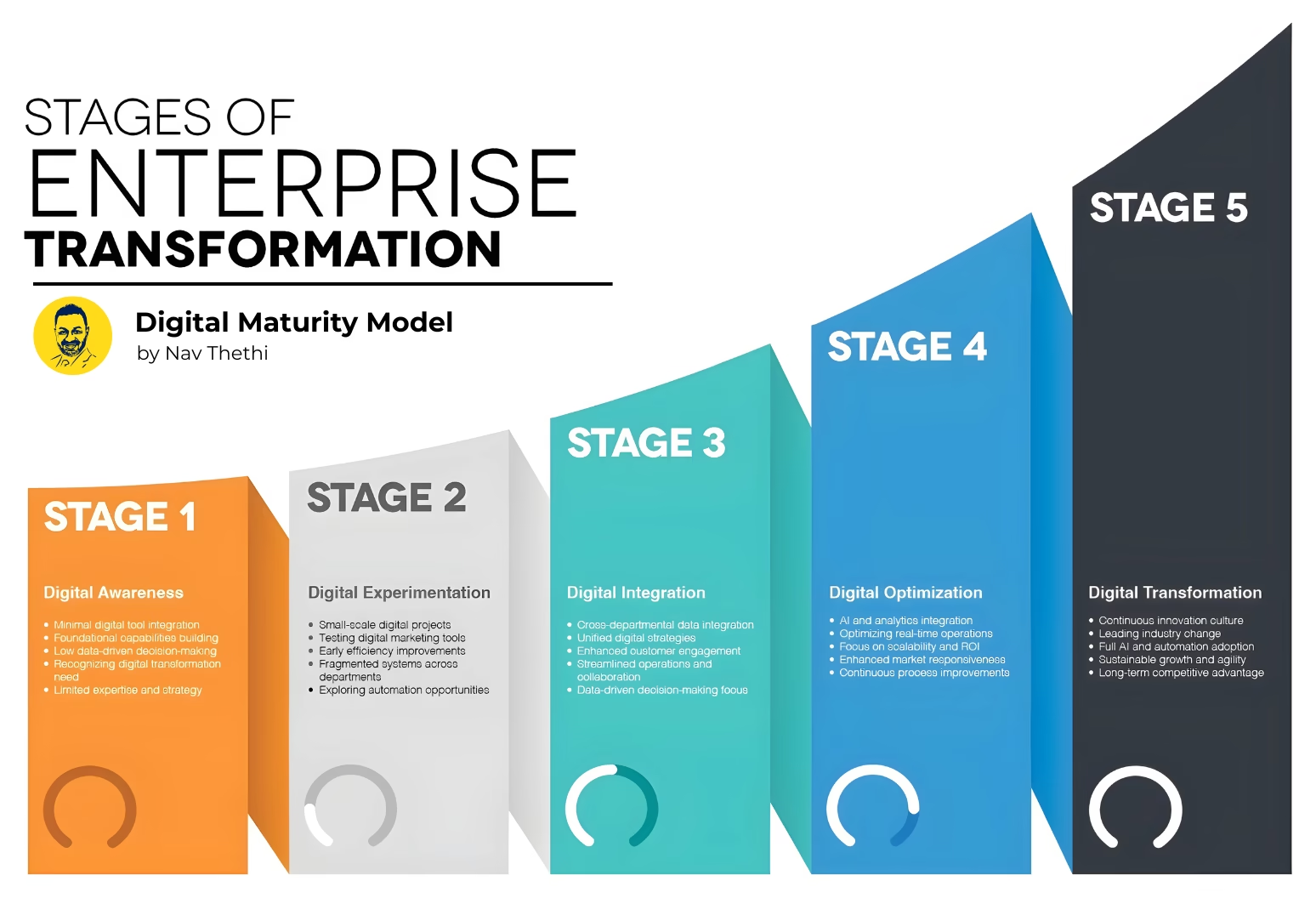
Five Stages of Digital Maturity
Organizations typically evolve through five maturity stages as digital capabilities become embedded into enterprise operations.
Awareness: Organizations recognize the importance of digital technologies, but adoption remains limited.
Experimentation: Teams begin testing digital tools to improve specific processes or experiences.
Integration: Systems and platforms start connecting across functions, improving visibility and coordination.
Optimization: Digital capabilities become embedded within operational workflows.
Transformation: Digital systems operate as a strategic foundation for enterprise growth and innovation.
Built on Global Standards: The Framework of Excellence
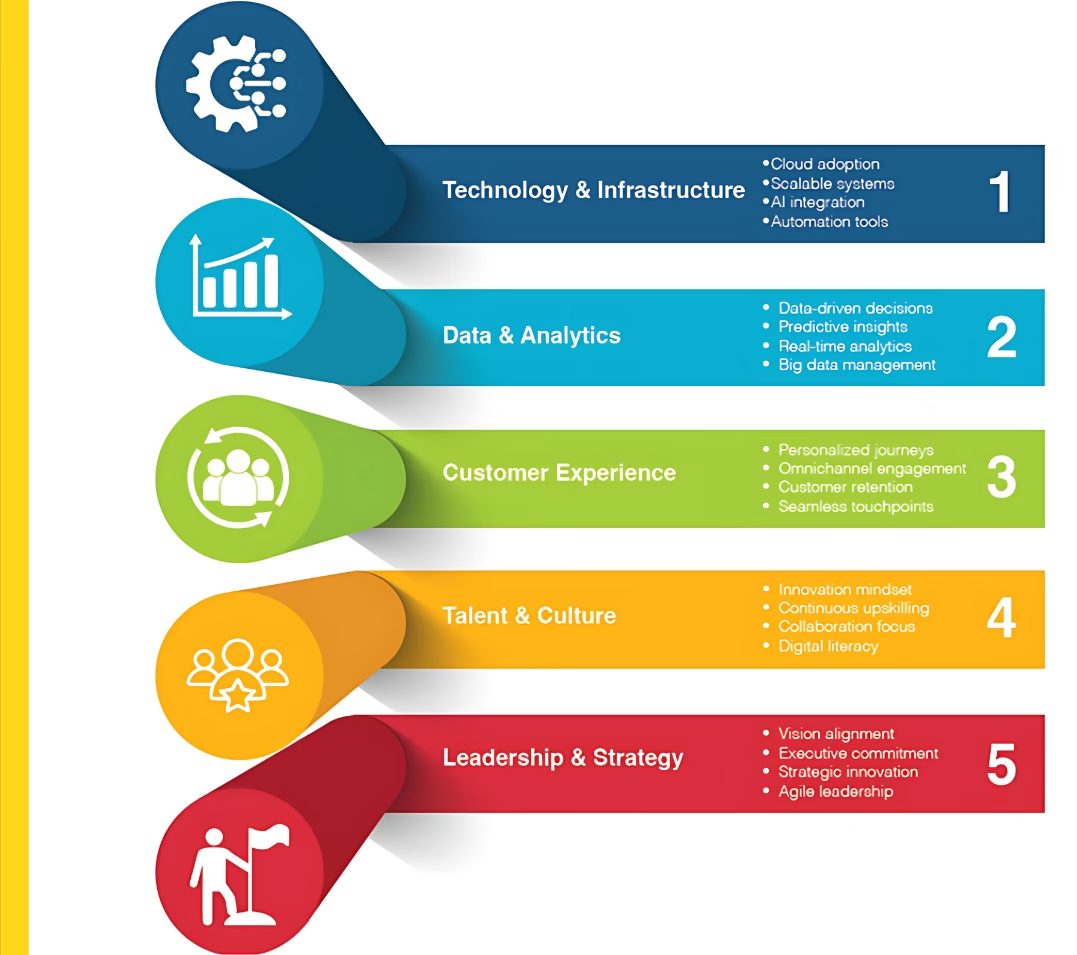
The Digital Maturity Model behind the assessment algorithm is strategically aligned with the foundational research and frameworks established by global leaders like McKinsey, Gartner, BCG, Deloitte, and MIT Sloan.
The globally accepted 5 pillars of digital transformation:
- Technology & Infrastructure
- Data & Analytics
- Customer Experience
- Talent & Culture
- Leadership & Strategy
All top-notch frameworks have a common voice that each of these five pillars is measured on a progressive scale across five stages of digital maturity: Awareness > Experimentation > Integration > Optimization > Transformation
What Higher Digital Maturity Enables

Faster Decision-Making
Digital systems support faster and more informed strategic decisions.

Enterprise Coordination
Platforms and workflows connect across departments and functions.

Stronger Customer Experiences
Data and digital channels align across the customer journey.

Organizational Agility
Enterprises respond faster to change and emerging opportunities.

How Digital Maturity Connects to Enterprise Strategy
Digital maturity provides the structural foundation behind multiple enterprise strategies.
These include:
Each strategy strengthens a specific capability within the broader digital maturity system.
Assess Your Digital Maturity
Understanding your current maturity stage is the first step toward improving enterprise performance.
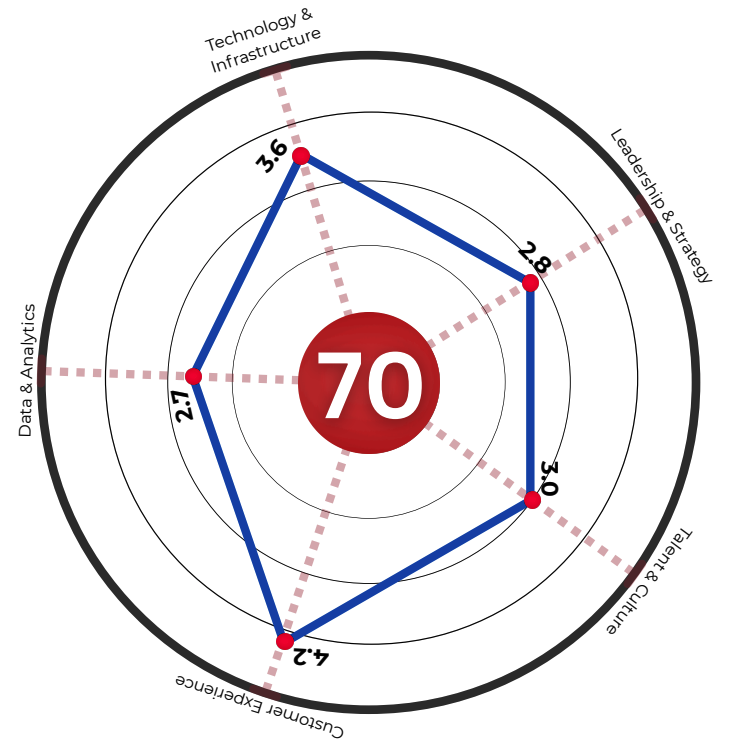
The Digital Maturity Assessment evaluates alignment across key organizational dimensions:
- Technology & Infrastructure
- Data & Analytics
- Customer Experience
- Talent & Culture
- Leadership & Strategy
The assessment identifies capability gaps and highlights priority areas for improvement.
Trusted by top-notch companies







The views and offerings on this website are my own and I do not represent or reflect those of any other brands.
Take the Next Step in Your Digital Maturity Journey
Accelerate Your Path to Digital Excellence
To move from ambition to execution, explore The Digital Maturity Executive Advisory Program. This guide helps leaders assess readiness, design a maturity roadmap, and unlock sustainable business performance through strategic transformation.
Enable and Empower Your Teams
Build the capabilities your teams need to thrive in the digital era. The Digital Maturity Enablement & Corporate Training Program equips professionals with the frameworks, tools, and insights to accelerate transformation and lead with confidence.
FAQ
Your Questions Answered: Insights for Clarity and Confidence
What is a digital maturity model?
A digital maturity model explains how organizations evolve as digital technologies, data systems, and operational processes become integrated into enterprise strategy.
How can organizations measure digital maturity?
Digital maturity is evaluated by assessing alignment across technology infrastructure, data capabilities, leadership strategy, talent, and customer experience systems.
Is digital maturity relevant across industries?
Yes. Organizations across sectors benefit from stronger coordination between technology, data, and decision-making.
Is digital maturity the same as digital transformation?
No. Digital transformation describes the change process, while digital maturity reflects the capability level achieved.
Why do many digital initiatives fail?
Many initiatives focus on deploying tools without aligning governance, strategy, and operational processes.
What is the difference between digital transformation and digital maturity?
Digital transformation is the adoption of digital technologies to improve business processes.
Digital maturity measures how effectively those technologies are integrated into strategy, operations, and decision-making to deliver measurable results.