


Sustainable Enterprise Strategy
How do you turn sustainability from reporting into enterprise resilience?
Is Green Sustainability Strengthening Your Business- Or Just Your Reporting?
According to the 2024 PwC Global CEO Survey, 45% of CEOs believe their companies will not remain economically viable over the next decade without reinvention. Sustainability and digital transformation are central to that shift. Yet in most organizations, sustainability lives in reports- not in systems. When responsibility is disconnected from operational design, resilience remains fragile.

Responsibility Without Architecture
Sustainability layered on top of legacy systems cannot scale impact.

Reporting Without Structural Alignment
Disclosure creates visibility. It does not create durability.

Resilience Is an Operating Discipline
Enterprises outperform when sustainability shapes decisions- not narratives.
Sustainability Fails When It Sits Outside the System
Many organizations treat sustainability as a parallel initiative, separate from core digital and operational decisions. When responsibility is not embedded into systems, governance, and capital allocation, impact remains cosmetic. Resilience requires structural integration, not external compliance.

What Does Sustainable Maturity Actually Look Like?
Sustainable enterprises evolve through structural phases:

Phase 1 – Report
Compliance, ESG disclosure, and sustainability visibility.


Phase 2 – Optimize
Operational efficiency, waste reduction, and system-level improvements.

Phase 3 – Architect
Sustainability embedded into capital allocation, digital systems, governance, and operating models.
How Does Green Sustainable Advantage Scale Through MATURITY?
Sustainable advantage follows structural discipline, not initiatives.
M
Measure
Establish environmental and operational exposure across enterprise systems. Replace optics with measurable impact baselines.
A
Align
Integrate sustainability into growth strategy, capital allocation, and executive incentives.
T
Transpose
Embed responsibility into architecture, vendor models, workflows, and digital design.
U
Upskill
Equip leaders to evaluate trade-offs across cost, resilience, and long-term economics.
R
Refine
Strengthen governance to eliminate fragmentation, duplication, and greenwashing risk.
I
Integrate
Embed sustainability signals into enterprise systems and operational decisions.
T
Track
Monitor efficiency, resilience stability, and footprint reduction through performance metrics.
Y
Yield
Deliver durable growth, reduced systemic risk, and enterprise trust.
25%
Operational
Efficiency Gains
30%
Energy & Resource
Optimization Potential
4%
EBITDA Uplift Through
Sustainable Operations
What Leaders Gain
- Responsible technology adoption
- Lower operational waste and redundancy
- Resilience built into enterprise systems
- Stronger investor and board confidence
- Long-term strategic stability

Related Insights
Practical guidance for executives navigating digital maturity.

Leadership’s Role in Driving Sustainable Digital Transformation – A Podcast Summary
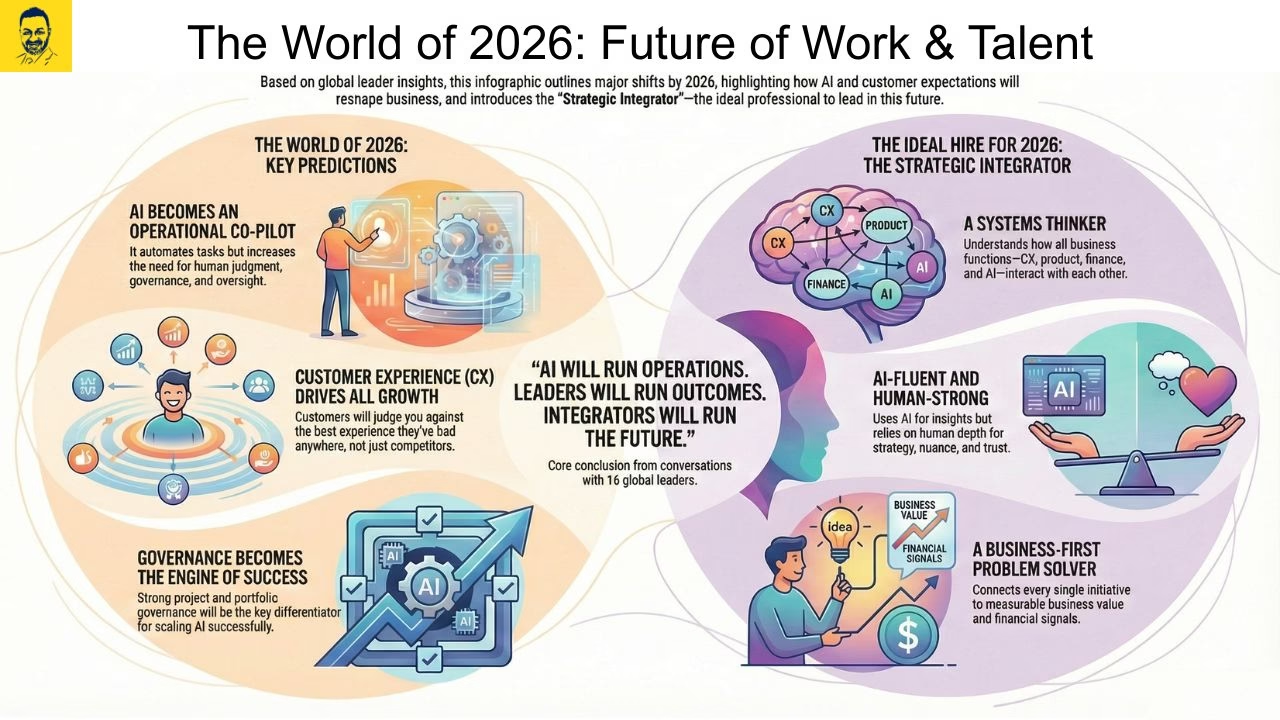
What Global Leaders Said About The Future of Work & AI in 2026: Exclusive Insights from The Nav Thethi Show

Digital Marketing Strategies: A Smarter, Greener, More Efficient Future – A Podcast Summary
Explore the Conversation
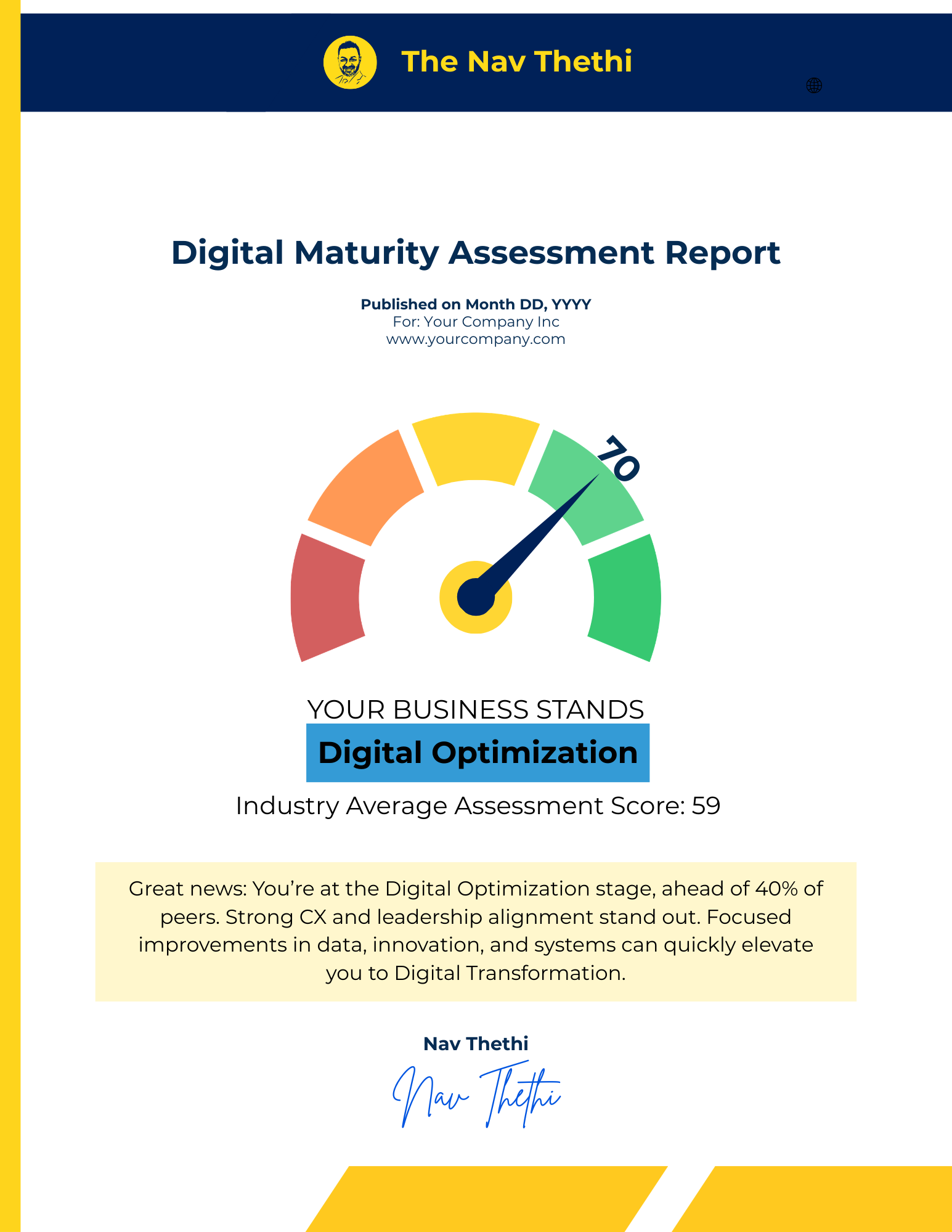
What Does the Sustainability Maturity Report Include?
This is not a generic ESG checklist.
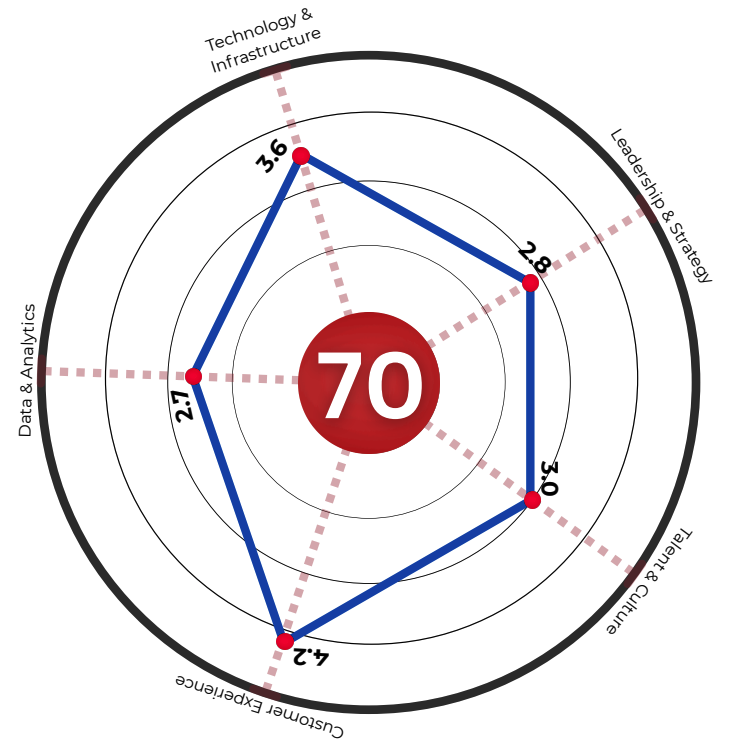
The Sustainability Maturity Assessment Report evaluates structural alignment across:
- Technology & Infrastructure
- Data & Analytics
- Customer Experience
- Talent & Culture
- Leadership & Strategy
Each report benchmarks your maturity stage, highlights execution gaps, and prioritizes high-leverage initiatives.
Get Your Sustainability Maturity Score
Assess how deeply sustainability is embedded into your digital systems, governance structures, and operational design.
Structural Sustainability Begins with Measurement Understand whether sustainability in your organization is operational- or merely reported.
This assessment provides:
- Sustainability Maturity Score
- Alignment Across Strategy, Systems, and Operations
- Governance and Execution Gaps
- Enterprise Resilience Indicators
- Priority Areas for Structural Improvement
Nav works with enterprise leaders to embed sustainability into digital and operational systems- rather than layering it externally. The focus is on aligning growth with responsibility, integrating sustainability into decision frameworks, and designing enterprises that remain resilient over time. Sustainability becomes a capability- not a constraint.
FAQ
Your Questions Answered: Insights for Clarity and Confidence
No.
Programs focus on initiatives and reporting. Sustainable enterprise strategy focuses on system design and long-term alignment.
Digital maturity determines how effectively sustainability can be embedded, measured, and scaled across enterprise systems.
Yes.
While sustainability priorities vary, the principles of responsible system design apply universally.
No.
When designed correctly, sustainability improves decision quality and reduces long-term risk.
No.
It is strategy-driven. Compliance becomes a by-product of well-designed systems.
Sustainable enterprise strategy aligns near-term decisions with long-term system health. When sustainability is embedded into core processes and technology choices, trade-offs become clearer and less reactive.
Are You Designing Sustainability
Or Just Reporting It?
Measure your structural maturity and move beyond compliance toward enterprise resilience.