


Operational Excellence Design
Are your operations optimized, or intentionally designed?
Why Do Operational Improvements Fail to Scale?
According to McKinsey’s 2023 Global Operations Survey, organizations that redesign end-to-end processes outperform peers in cost efficiency and service reliability- yet most improvement efforts remain localized. Teams optimize steps. Friction moves elsewhere. Without systems-level design, operational gains are temporary and fragile. Operational excellence design replaces incremental improvement with structural alignment.

Reduced Systemic Friction
Eliminate rework, bottlenecks, and unnecessary complexity.

Reliable Execution Under Change
Maintain performance even as conditions evolve.

Cross-Functional Coordination
Align teams around shared workflows and decision clarity.
Operational Excellence Model
Operational excellence is not achieved through efficiency alone. It is achieved through intentional system design.
This model focuses on four structural disciplines:
- End-to-End Process Clarity: Map workflows across functions, not silos.
- Outcome-Driven Workflow Design: Design processes around results, not tasks.
- Ownership & Decision Architecture: Clarify accountability and authority.
- Scalable Operating Infrastructure: Ensure systems adapt without fragility.
When workflows are designed intentionally, operations deliver consistency, agility, and confidence.

From Process Optimization to Operational Design
Organizations typically move through three structural phases:

Phase 1 – Optimize
Teams improve individual steps, but friction shifts elsewhere.


Phase 2 – Coordinate
Workflows become clearer, yet cross-functional misalignment remains.

Phase 3 – Design
Operations are intentionally structured around outcomes, ownership, and scalability.
Operational Excellence Through MATURITY
Operational performance scales through structural clarity.
M
Measure
Measure process performance, bottlenecks, and operational gaps. See clearly where friction exists today.
A
Align
Align decision rights, ownership, and cross-functional handoffs.
T
Transpose
Translate operational priorities into redesigned workflows and governance models.
U
Upskill
Equip leaders and teams to operate within structured, outcome-driven systems.
R
Refine
Remove redundancy, clarify process gaps, and strengthen coordination.
I
Integrate
Embed operational design into digital systems and performance metrics.
T
Track
Monitor workflow reliability, execution speed, and quality consistency.
Y
Yield
Achieve stable performance, improved cost efficiency, and enterprise agility.
30%
Reduction in
Process Rework
35%
Improvement in
Operational Cycle Time
25%
Increase in
Cross-Functional Efficiency
What Leaders Gain
- Clear End-to-End Process Visibility
- Reduced Bottlenecks and Handoff Delays
- Stronger Cross-Functional Alignment
- Scalable Operational Systems
- Greater Execution Confidence

Related Insights
Practical guidance for executives navigating digital maturity.

Digital Supply Chain Management: Building Resilience and Efficiency – A Podcast Summary

The Leadership Mirror: Reflecting on Boss Behaviors and Team Performance

Unlocking User Experience Design: Strategies for Success
Explore the Conversation
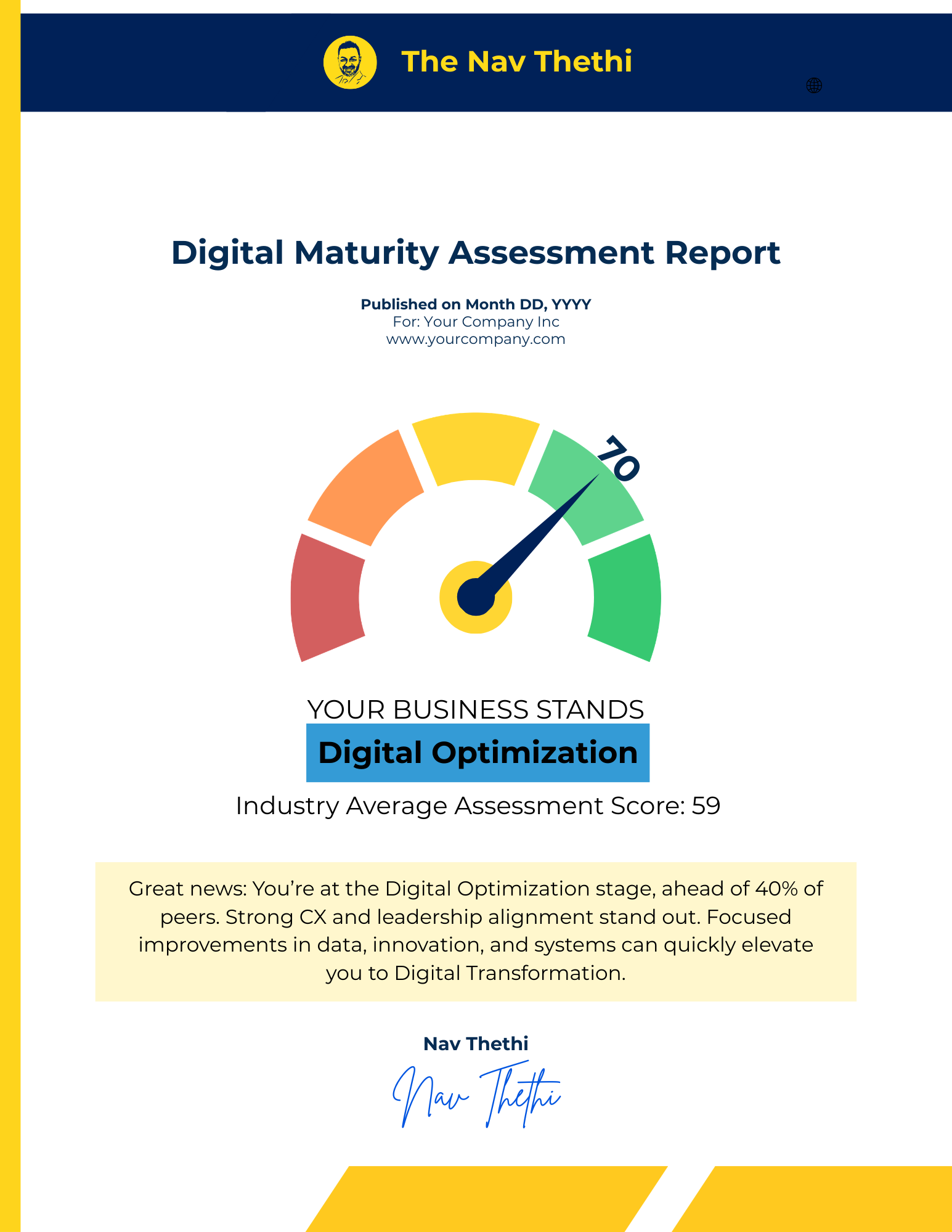
What Does the Operational Maturity Report Reveal?
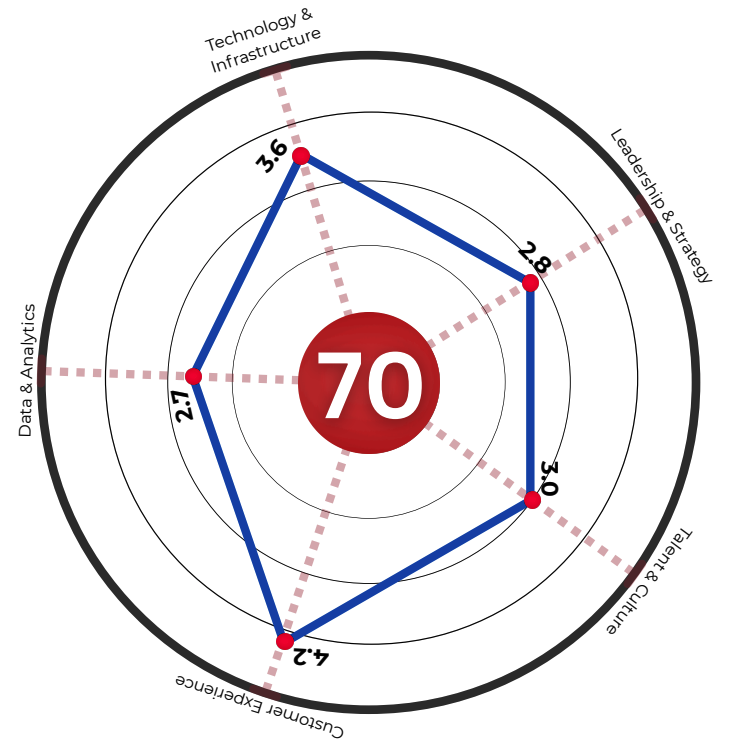
The Digital Maturity Assessment evaluates operational design alignment across:
- End-to-End Process Clarity
- Workflow Efficiency & Friction Points
- Cross-Functional Handoff Reliability
- Decision Rights & Ownership Structure
- Performance & Scalability Readiness
The report benchmarks your operational maturity stage, identifies systemic friction, execution gaps, and scalability risks.
How Mature Is Your Operational Design?
Assess how effectively your operational systems support reliability, coordination, and scalable performance.
Operational Clarity Begins with Structural Assessment
This assessment reveals:
- Operational Maturity Score
- Workflow Friction Indicators
- Decision Architecture Gaps
- Cross-Functional Alignment Weaknesses
- Priority Redesign Opportunities
How Nav Works With Leaders
Nav partners with executive teams to redesign operational systems by removing systemic friction, clarifying ownership and decision architecture, and embedding scalable workflows that deliver reliable, enterprise-level performance.
FAQ
Your Questions Answered: Insights for Clarity and Confidence
No.
Process improvement optimizes steps. Operational excellence design ensures the entire system works cohesively.
Operational excellence design provides the foundation that allows digital initiatives to scale reliably.
No.
While execution varies, the principles of systems design apply across industries.
Not always.
Many gains come from clarifying workflows, ownership, and decision paths within existing structures.
Digital maturity determines how effectively operations can be measured, coordinated, and adapted over time.
Well-designed operations absorb change more effectively because workflows, ownership, and decision paths are already clear. This reduces reactive firefighting and allows teams to adapt without breaking core execution.