


Marketing Growth Engine
Is your marketing generating activity, or predictable revenue?
Why Do Most Marketing Investments Fail to Produce Predictable Growth?
According to McKinsey’s “The Growth Triple Play” research (2023), companies that integrate marketing, sales, and customer experience outperform peers in revenue growth by up to 2x. Yet most organizations still measure activity, not contribution. Campaigns launch. Leads flow. Revenue impact remains unclear. Without structural alignment between messaging, demand generation, sales execution, and performance measurement, growth becomes episodic, not engineered.

Consistent Revenue Contribution
Marketing performance tied directly to pipeline and revenue outcomes.

Scalable Demand Generation
Repeatable systems that generate qualified demand across channels.

End-to-End Funnel Visibility
Shared definitions and metrics from awareness to revenue.
Marketing Engine Model
Marketing growth is not driven by campaigns. It is driven by operating discipline. The Marketing Engine Model aligns four structural components:
- Strategic Positioning: Clear value proposition and differentiated messaging.
- Journey Orchestration: Coordinated touchpoints across the buyer lifecycle.
- Data & Technology Integration: Unified insight across platforms and systems.
- Revenue-Linked Measurement: Performance metrics directly tied to business outcomes.
When these elements operate independently, growth plateaus. When aligned, marketing becomes a predictable revenue system.

From Marketing Activity to a Growth Engine
Organizations typically move through three structural stages:

Phase 1 – Execute
Campaigns run across channels, but performance remains fragmented and weakly connected to revenue.


Phase 2 – Optimize
Data improves visibility and channel performance, yet revenue alignment is still inconsistent.

Phase 3 – Engineer
Marketing operates as a coordinated growth system driving predictable pipeline and measurable revenue impact.
Marketing Growth Through MATURITY
Marketing performance scales through structural discipline.
M
Measure
Measure acquisition cost, conversion flow, and retention signals. Know where growth is leaking.
A
Align
Align marketing, sales, and leadership on shared revenue definitions and KPIs.
T
Transpose
Translate strategy into structured buyer journeys and integrated execution models.
U
Upskill
Equip teams to interpret performance insight and optimize collaboratively.
R
Refine
Eliminate redundant efforts, clarify positioning, and improve conversion architecture.
I
Integrate
Embed marketing systems into CRM, pipeline management, and revenue forecasting.
T
Track
Monitor contribution to pipeline health, conversion velocity, and revenue quality.
Y
Yield
Achieve predictable growth, improved ROI, and stronger customer lifetime value.
40%
Increase in
Marketing-to-Pipeline Conversion
30%
Improvement in
Pipeline Velocity
25%
Increase in
Marketing-Attributed Revenue
What Leaders Gain
- Clear Revenue Contribution Metrics
- Aligned Sales–Marketing Operating Model
- Predictable Demand Generation
- Reduced Funnel Friction
- Stronger ROI on Marketing Investments

Related Insights
Practical guidance for executives navigating digital maturity.

Digital Marketing Strategies: A Smarter, Greener, More Efficient Future – A Podcast Summary

The Digital Maturity of E-Commerce: A New Playbook for Business Growth – A Podcast Summary
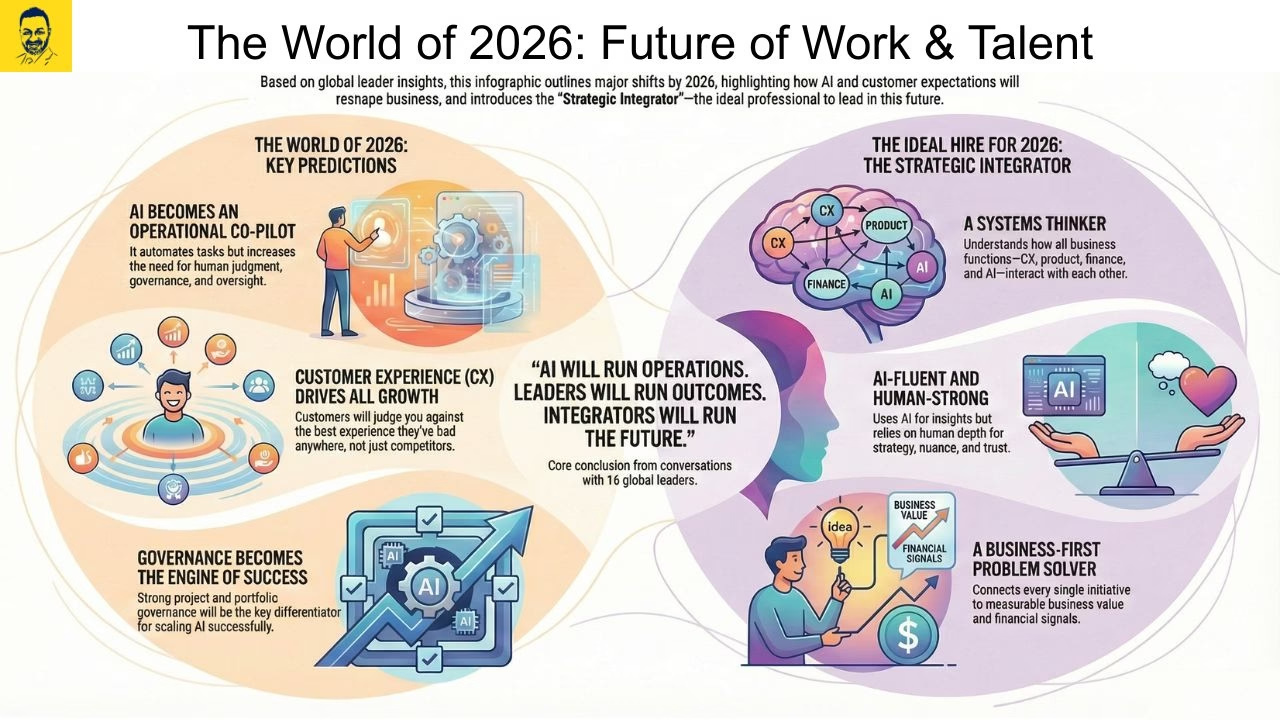
What Global Leaders Said About The Future of Work & AI in 2026: Exclusive Insights from The Nav Thethi Show
Explore the Conversation
What Happens When AI Meets Human-Centered Customer Experience?
Power of Building Personal Brand and Credibility for Success
Your Website Is No Longer Your Brand Front Door: New AI & GoToMarket Strategies
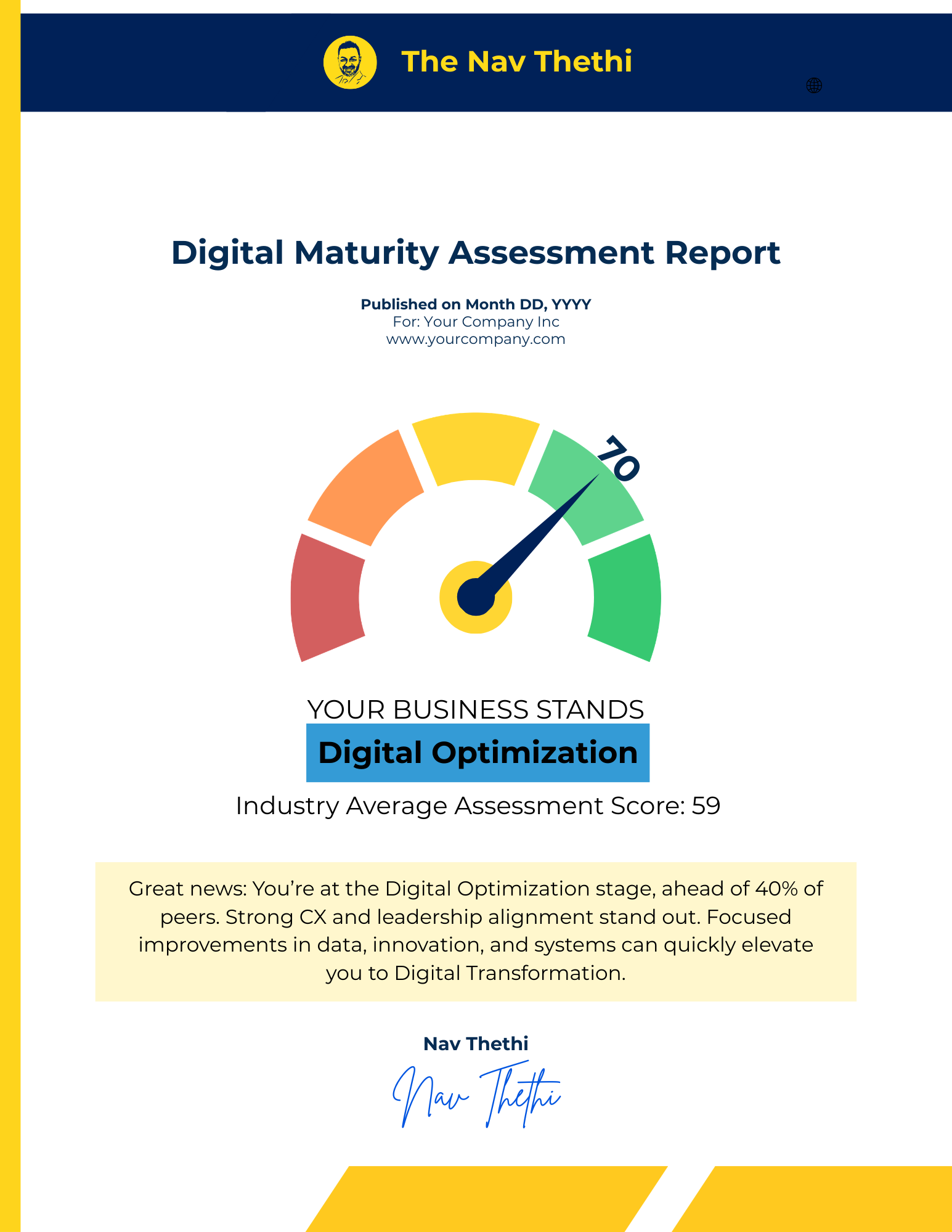
What Does the Marketing Growth Assessment Report Include?
Marketing maturity isn’t measured by campaign volume, it’s measured by its contribution to pipeline and revenue.
The Marketing Growth Assessment Report evaluates:
- Funnel-to-Revenue Alignment
- Pipeline Conversion Efficiency
- Sales–Marketing Coordination Gaps
- Demand Generation Consistency
- Revenue Attribution & ROI Clarity
Each report benchmarks your maturity stage, from fragmented execution to an integrated revenue engine, and outlines priority actions to drive predictable growth.
How Mature Is Your Marketing System?
Assess how effectively your marketing systems support pipeline quality, revenue conversion, and long-term growth.
Revenue Growth Begins with Structural Alignment
This assessment reveals:
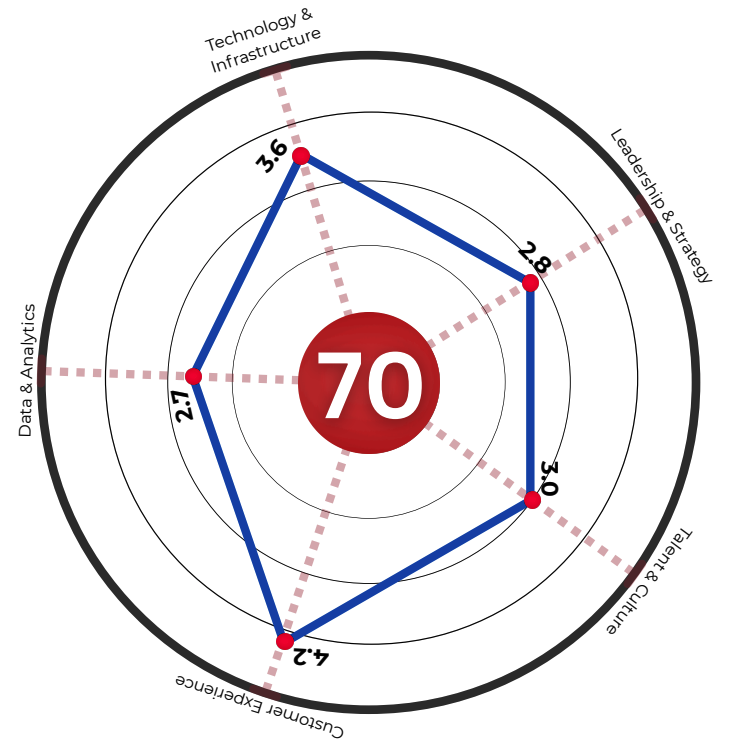
- Marketing Maturity Score
- Funnel & Conversion Benchmarking
- Sales–Marketing Alignment Gaps
- Measurement & Attribution Weaknesses
- Priority Actions for Revenue Optimization
How Nav Works With Leaders
Nav works with CMOs and executive teams to transform fragmented marketing activity into coordinated growth systems by defining revenue contribution clearly, aligning funnel stages end-to-end, identifying where alignment breaks down, and ensuring performance translates directly into measurable business outcomes.
FAQ
Your Questions Answered: Insights for Clarity and Confidence
No.
A funnel is a model. A growth engine is an operating system that connects strategy, execution, and measurement across the entire buyer journey.
Not necessarily.
Most organizations already have the tools; the challenge lies in alignment, integration, and measurement.
Yes.
While execution differs, the principles of system-driven growth apply across business models.
Campaign optimization improves individual efforts.
A growth engine ensures those efforts work together to create sustained pipeline and revenue impact.
Digital maturity determines how effectively insights can be translated into coordinated action across channels and teams.
A marketing growth engine is designed to be adaptive. Because performance is measured at the system level rather than at the campaign level, shifts in buyer behavior can be identified early and addressed without rebuilding the entire marketing model.