


Data-Driven Intelligence
Is your data informing decisions, or just filling dashboards?
Why Do Most Organizations Struggle to
Become Truly Data-Driven?
According to the 2023 Gartner CEO and Senior Business Executive Survey, while digital initiatives remain critical to growth, fewer than half of organizations achieve expected value from their investments. Data volume is increasing. Decision confidence is not. When ownership is fragmented, quality is inconsistent, and insight activation is slow, data becomes noise, not intelligence.

Confident Executive Decisions
Move from reactive reporting to structured decision support.

Smarter Revenue Forecasting
Align predictive insight with capital and growth priorities.

Enterprise-Wide Visibility
Create shared definitions, shared metrics, and shared direction.
Enterprise Intelligence Model
Data-driven intelligence is not about dashboards. It is about designing systems that consistently convert data into decisions.
This model focuses on four structural disciplines:
- Signal Integrity: Capture reliable data across critical business systems.
- Definition & Ownership: Align metrics, standards, and accountability.
- Insight Translation: Turn data into executive-ready intelligence.
- Decision Activation: Embed insight directly into workflows and strategy.
When these elements work together, data moves from reporting to coordinated action.
Intelligence is structured, not extracted.

From Data Collection to Enterprise Intelligence
Organizations typically move through three structural phases:

Phase 1 – Collect
Data exists across systems but lacks ownership and reliability.


Phase 2 – Analyze
Dashboards and analytics provide insight, but activation remains inconsistent.

Phase 3 – Activate
Data flows directly into operational and strategic decisions.
Data-Driven Intelligence Through MATURITY
Intelligence maturity is not about volume. It is about structural discipline.
M
Measure
Measure data quality, accessibility, and decision usage. Assess how data actually supports decisions.
A
Align
Align data definitions, ownership, and KPIs across leadership and functions.
T
Transpose
Translate data priorities into governance models, integration architecture, and workflow design.
U
Upskill
Equip leaders and teams to interpret insight confidently and act decisively.
R
Refine
Eliminate redundancy, improve data hygiene, and institutionalize quality standards.
I
Integrate
Embed intelligence into operational systems and decision environments.
T
Track
Monitor activation speed, decision accuracy, and value realization metrics.
Y
Yield
Achieve predictable growth, capital efficiency, and enterprise alignment.
40%
Improvement in
Decision Cycle Speed
35%
Increase in
Forecast Accuracy
30%
Reduction in
Data Redundancy Costs
What Leaders Gain
- A Prioritized Intelligence Roadmap
- Reliable Data Foundations
- Faster, Aligned Decisions
- Cross-Functional Metric Consistency
- Stronger ROI on Digital Investments

Related Insights
Practical guidance for executives navigating digital maturity.

Talk to Ads, Convert More: The Conversational AI Powerhouse

What Global Leaders Said About The Future of Work & AI in 2026: Exclusive Insights from The Nav Thethi Show

How Data-Driven Decision-Making Powers Sustainable, Efficient, and Personalized Business – A Podcast Summary
Explore the Conversation
Why Contracts Are Killing Your Deals (And How AI Fixes It)
Zero Party Data, Real Time AI, and the Future of B2B Personalization
AI, Marketing, and the Future of the C-Suite: Trust, Data, and Growth
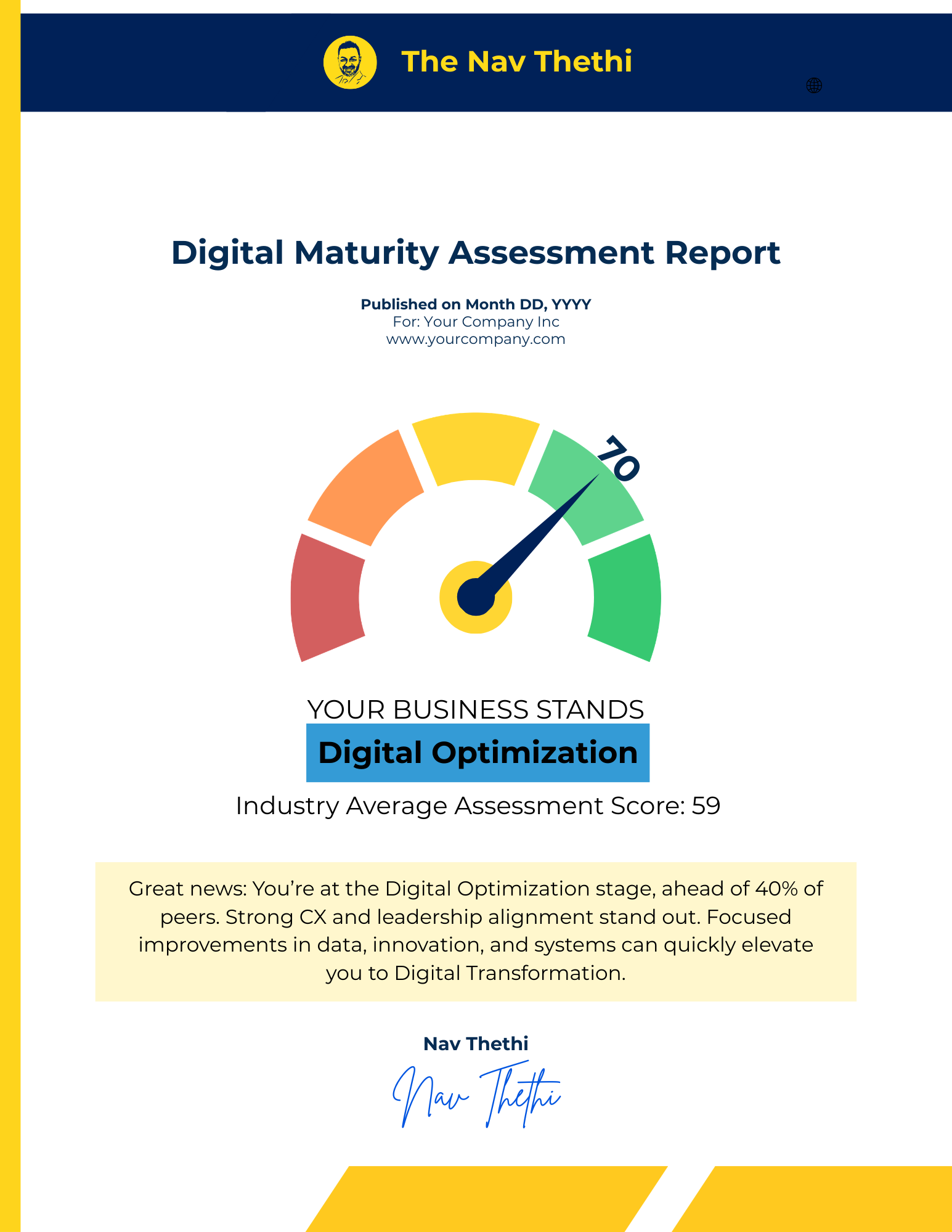
What Does the Intelligence Maturity Report Include?
Data-driven intelligence is not measured by dashboard volume.
It is evaluated through structural alignment.
The Intelligence Maturity Report assesses:
- Data Reliability & Governance Structure
- Metric Alignment Across Functions
- Decision Activation Speed
- Integration Health Across Systems
- Value Realization & ROI Impact
Each report benchmarks your maturity stage, from fragmented data awareness to coordinated intelligence transformation, and highlights priority actions for enterprise alignment.
How Mature Is Your Intelligence Architecture?
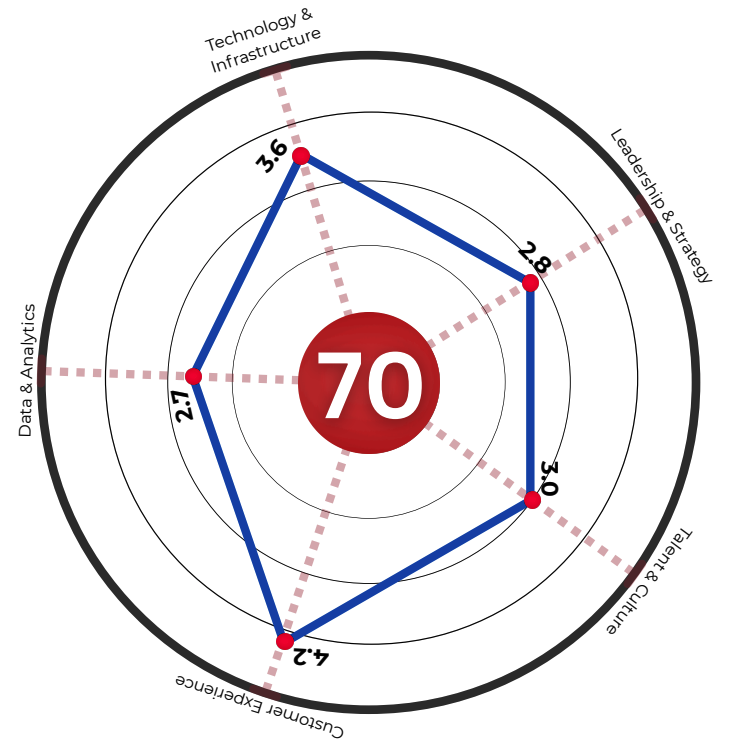
Assess how effectively your organization captures, governs, and activates data across systems and leadership.
Intelligence Begins with Structural Clarity
This assessment reveals:
- Intelligence Maturity Score
- Stage Benchmark (Awareness → Transformation)
- Data Governance Gaps
- Activation & Decision Alignment Weaknesses
- Priority Actions for Enterprise Integration
How Nav Works With Leaders
Nav works with executive teams to transform fragmented data environments into unified intelligence ecosystems by clarifying what data matters, establishing ownership, and ensuring insight flows directly into confident, coordinated decisions.
FAQ
Your Questions Answered: Insights for Clarity and Confidence
No.
Analytics and BI focus on reporting and visualization. Data-driven intelligence focuses on decision support- ensuring insight is timely, trusted, and actionable.
Not initially.
Strong intelligence starts with reliable data foundations. Advanced analytics and AI become effective only after maturity in data quality, governance, and usage.
No.
While data sources vary by industry, the principles of intelligence design apply across sectors.
Because most investments prioritize tools over structure.
Without clear ownership, quality standards, and governance, data remains fragmented and under-utilized.
Digital maturity determines how consistently data can be captured, trusted, and activated across the organization.
Low maturity results in insight silos and slow decision-making.
The assessment highlights intelligence gaps, priority focus areas, and readiness levels.
It is designed to guide strategic decisions- not prescribe tools.